F1 Drivers 2026
F1 drivers
Welcome to GPblog’s F1 drivers page. Here you will find a complete overview of all Formula 1 drivers competing in the 2026 season. You can also find the latest championship standings, as well as profiles of Max Verstappen and every other driver, including results and the latest F1 news.
The 2026 Formula 1 grid
Compared to the 2025 season, the 2026 Formula 1 grid has remained largely unchanged. Given the timing, that is no surprise. A completely new set of technical regulations has been introduced for 2026, bringing major changes to both the chassis and the power units. A new generation of Formula 1 cars comes with a high level of uncertainty, as such regulation changes often lead to significant shifts in the competitive order. Many teams and drivers have therefore opted for stability, allowing them to assess their position before committing to long-term decisions.
The biggest change is the number of drivers on the grid. A new eleventh team joins Formula 1 in 2026: Cadillac. The American team has signed Valtteri Bottas and Sergio Perez as its race drivers, with Zhou Guanyu as reserve driver. Meanwhile, Sauber has officially transitioned into Audi. The team’s line-up remains unchanged, with Nico Hulkenberg and Gabriel Bortoleto continuing to race for the team led by Jonathan Wheatley.
ADVERTISEMENT
Of the ten teams that were already on the grid in 2025, only two have made driver changes, both of them Red Bull teams. Red Bull Racing has moved Yuki Tsunoda to a test and reserve role for 2026. His seat alongside Max Verstappen is taken by Isack Hadjar. Hadjar’s place is filled by 18-year-old rookie Arvid Lindblad, who joins Liam Lawson.
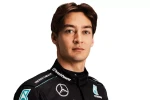
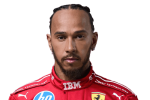
Lewis Hamilton made the move to Ferrari in 2025 but experienced a difficult first season. Midway through the year, he even suggested the team should consider replacing him. Despite those challenges, the seven-time world champion remains with Ferrari in 2026 alongside Charles Leclerc. At Mercedes, the driver line-up also remains unchanged despite ongoing rumours surrounding Verstappen. George Russell and Kimi Antonelli have reportedly both signed multi-year contracts. Reigning champions McLaren continue with Lando Norris and Oscar Piastri, with both drivers expected to stay beyond 2026.
Williams enjoyed a strong 2025 season with Alex Albon and Carlos Sainz and aims to build on that in 2026. With two experienced drivers and team principal James Vowles, the team is well positioned to continue that progress.
Lance Stroll will once again race for Aston Martin in 2026. As the son of team owner Lawrence Stroll, his position within the team remains secure. Fernando Alonso continues as his teammate, in what could potentially be his final season in Formula 1.
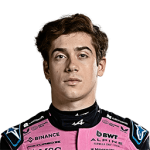
Haas heads into the new era with Esteban Ocon and Oliver Bearman. Ocon brings significant experience from multiple teams, while Bearman is widely regarded as a future title contender. Pierre Gasly remains under contract at Alpine for the long term, while his teammate position was uncertain for some time. The team ultimately selected Franco Colapinto, who is expected to attract strong interest from South America.
ADVERTISEMENT
Changes for the 2026 F1 season
The FIA has introduced a new set of regulations for the 2026 Formula 1 season. Both the chassis and power unit rules have been significantly revised. The cars are smaller and lighter, which should improve agility and promote overtaking. Movable front and rear wings replace the DRS system, aiming to provide more grip where drivers currently lack it. Overall downforce and drag have been reduced significantly, and the 18-inch Pirelli tyres have been made narrower.
From 2026 onwards, Formula 1 uses a new power unit with a 50/50 split between internal combustion and electric power. The engine runs on a new advanced sustainable fuel, which is not expected to negatively impact performance. The hybrid system has been simplified with the removal of the MGU-H, while the MGU-K output has been increased from 120 kW to 350 kW.
Several new terms have also been introduced. The overtake mode replaces DRS. Drivers within one second of the car ahead can use it to gain extra power for overtaking. This can be deployed in a single burst or spread across a lap.
Boost mode is another new tool, allowing drivers to deploy energy from the Energy Recovery System (ERS). It can be used both offensively and defensively, delivering maximum power from both the engine and battery anywhere on the circuit.
ADVERTISEMENT
Finally, there is recharge. Drivers can replenish their battery using energy recovered under braking, when lifting off the throttle at the end of straights and through corners.
Mercedes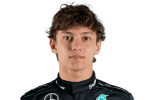 Mercedes
 Ferrari
 Ferrari
 McLaren
 McLaren
 Red Bull Racing
 Alpine
 Haas
Haas Racing Bulls
 Alpine
 Red Bull Racing
 Williams
 Racing Bulls
 Audi
Audi Haas
Haas Williams
 Audi
Audi Cadillac
 Cadillac
 Aston Martin
 Aston Martin
Kimi
Antonelli
1
131 pts
George
Russell
2
88 pts
Charles
Leclerc
3
75 pts
Lewis
Hamilton
4
72 pts
Lando
Norris
5
58 pts
Oscar
Piastri
6
48 pts
Max
Verstappen
7
43 pts
Pierre
Gasly
8
20 pts
Oliver
Bearman
9
18 pts
Liam
Lawson
10
16 pts
Franco
Colapinto
11
15 pts
Isack
Hadjar
12
14 pts
Carlos
Sainz
13
6 pts
Arvid
Lindblad
14
5 pts
Gabriel
Bortoleto
15
2 pts
Esteban
Ocon
16
1 pts
Alexander
Albon
17
1 pts
Nico
Hulkenberg
18
0 pts
Valtteri
Bottas
19
0 pts
Sergio
Perez
20
0 pts
Lance
Stroll
21
0 pts
Fernando
Alonso
22
0 pts
Monaco Grand Prix
Overview
Friday 05.06.26
Practice 1
11:30 AM
Practice 2
03:00 PM
Saturday 06.06.26
Practice 3
10:30 AM
Qualification
02:00 PM
Sunday 07.06.26
Race
01:00 PM
Friday 05.06.26
Practice 1
Fri 11:30 AM
Practice 2
Fri 03:00 PM
Saturday 06.06.26
Practice 3
Sat 10:30 AM
Qualification
Sat 02:00 PM
Sunday 07.06.26
Race
Sun 01:00 PM
Times are in your local timezone
Popular on GPBlog
1
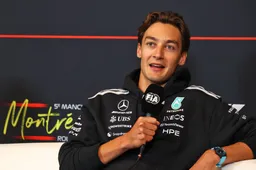
Russell pushes back on F1 engine changes after epic Antonelli battle at Canadian GP
2091 times read
2
Montoya issues strong response to Verstappen after F1 penalty row
903 times read
3
F1 Today | Hamilton pays emotional tribute to brother Nicolas, Domenicali backs V8 return
755 times read
4
Verstappen receives request to stay at Red Bull until 2027 before joining Ferrari a year later
752 times read
Loading